News
Study program
RD & Innovation
How to structure a research project?
By Albane Français
2026-03-16
By Albane Français
2026-03-16
To demystify the subject, SYNTHÈSE had the opportunity to speak with Simon Dor, associate professor of video game studies and co-director of the department and program in Creation and New Media at UQAT-Montréal.
Let’s explore the insights of our professor and researcher, who has been invited to share his thoughts on this topic.
💡 The difference between a problematic and a problem:
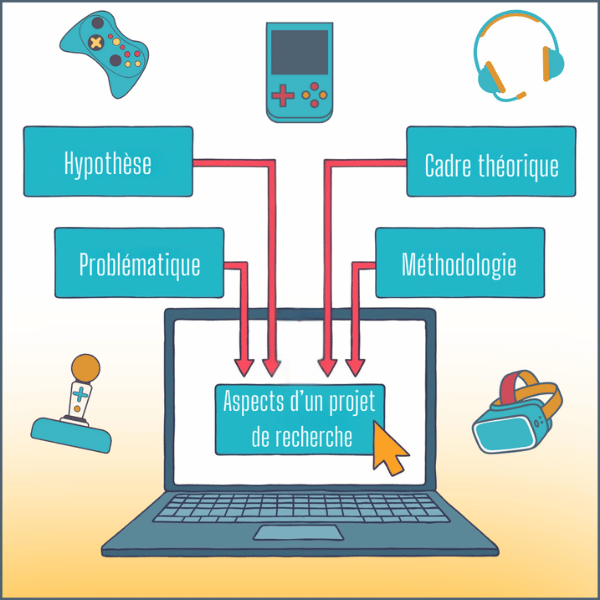
A problematic is broader than a problem and concerns a research discipline. For example, one could say that a video game that is too difficult is a problem for a designer who wants to make an accessible game, but that is not a research problematic. However, understanding why a gaming community enjoys being challenged through very difficult experiences—that begins to look like a problematic. One needs a more universal and generalizable vision to arrive at a problematic.
2. Hypothesis: This is the anticipated answer to our problematic. The hypothesis is not a “guess”: it is constructed based on the state of the field. If we read what has been published on our question, here is an answer we might arrive at. In other words, it proposes a possible and plausible result based on prior data. It ensures in some way that the question has a plausible answer, even if it is not necessarily the correct one yet.
3. Theoretical framework: This refers to the approach we choose to use: a design-based research perspective, a feminist approach, a background in cultural studies, or a cognitive framework. The theoretical framework allows us to position ourselves without having to explain all prior knowledge, since we cannot know everything in advance and some frameworks use contradictory terms. It helps clarify certain concepts and gives an idea of where our research starts from. The framework provides guidelines to determine how to make sense of our results.
💡 Examples of theoretical frameworks applicable to video game research:
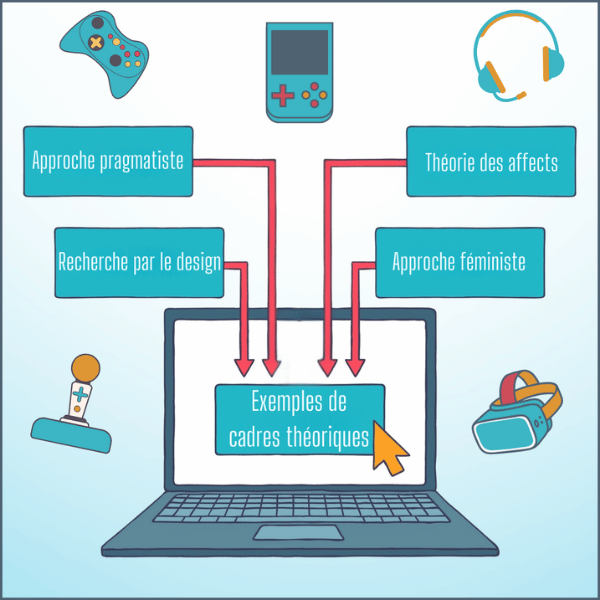
Theoretical frameworks can be imagined as sub-disciplines, just as psychology can be approached from psychodynamic, humanistic, or cognitive-behavioral perspectives. Here are four different approaches:
The pragmatist approach: focusing on concrete and measurable effects an object has on us or that a practice produces.
Design-based research: setting up a project and observing one’s own design practice to draw conclusions.
Affect theory: focusing on how cultural objects have a direct, pre-emotional impact on our body.
The feminist approach: understanding the role of gender issues and sociocultural inequalities in the field or in the works created.
A theoretical framework can be broad or precise, depending on the need and the project. For instance, one could imagine a “cultural studies” framework as broader than a “feminist approach,” or an “intersectional feminist approach” for even more precision.
💡 Choosing the right methodology to answer our problematic:
We need to be able to anticipate the path that will lead to a solution. In some situations, the methodology can help reframe the problematic. If we cannot “map out” a path toward a satisfactory answer, it may mean the problematic is still too broad.
My research project, titled “Représenter le pouvoir autrement ,” was built on the problematic that strategy video games are both the best examples of games representing different forms of power, yet at the same time very simplistic in how they portray it.
Hypothesis:
Our hypothesis was that strategy games could express a more complex vision of power, but to do so, they had to use figures very different from those in standard strategy games. For example, the presence of characters with a unique name, voice, and face allowed for criticism of the imperialist vision of these games through the attachment we feel for them or explicitly through their dialogues.
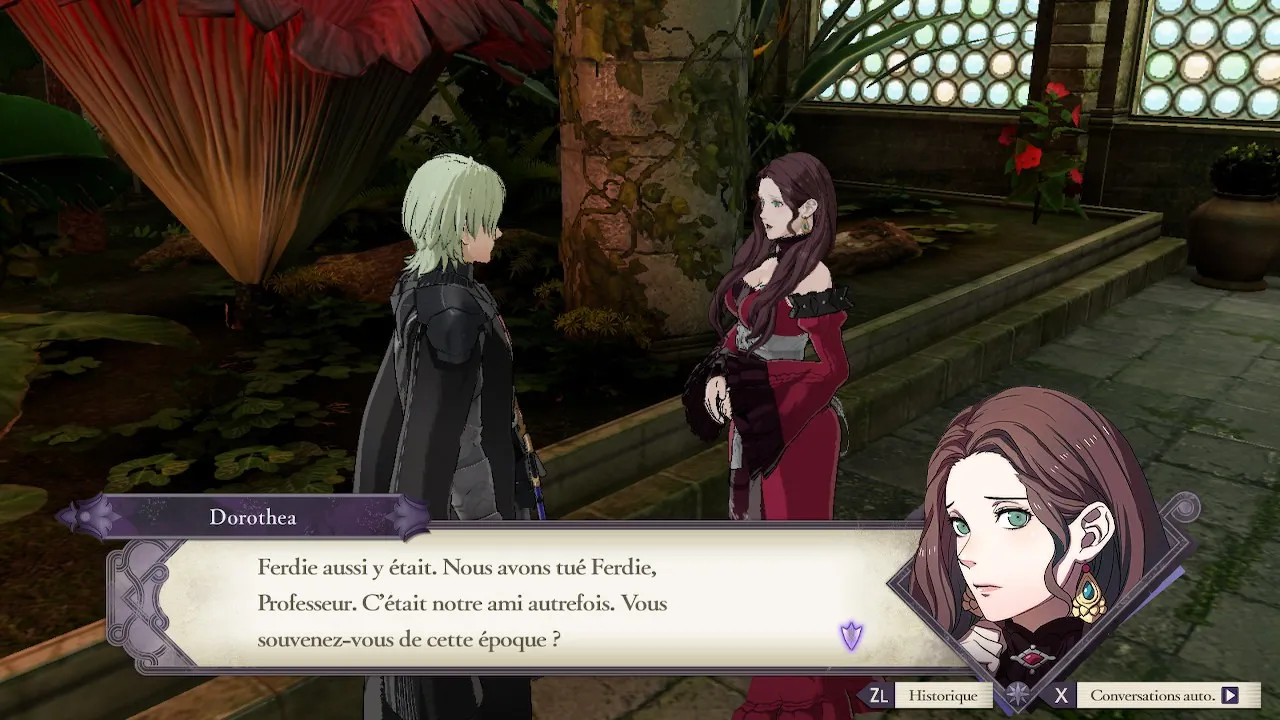 Caption: Fire Emblem: Three Houses (Intelligent Systems & Koei Tecmo Games, 2019), in which the characters who fight for us have a complex personality and express doubts about the military actions we carry out.
We adopted a semiotic* and media framework in order to approach games as cultural objects capable of expressing ideas, a certain vision of the world, or capable of transmitting recurring figures from one work to another throughout the cultural history of the medium.
*Study of signs, symbols, and meaning-making processes. In other words, it is a way of analyzing how meaning is constructed and interpreted in a given context (text, image, discourse, object, interface, artistic work, etc.).
Methodology:
Our methodology was therefore an analysis of the common figures found in about forty video games, as well as in the texts discussing them (reviews, editorials, etc.). We found that some used satire, while others demonstrated the complexity of a social reality through equally complex economic systems.
To learn more, visit Simon Dor’s blog and TikTok videos on the topic.
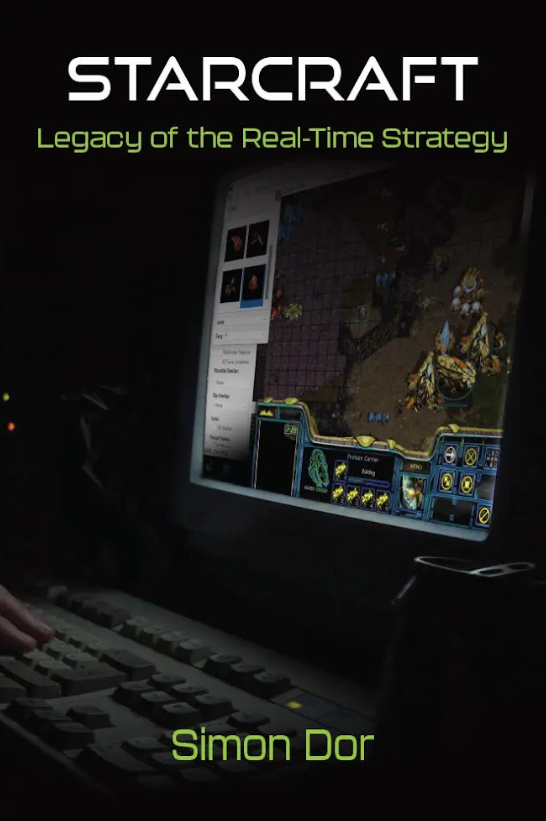
His research focuses on strategy, management, role-playing, and esports games, particularly the power dynamics underlying them.